

Definitions · Infrastructure
What is a virtual machine?
What is a virtual machine? A software emulation of a computer on shared hardware: how virtualisation works and how instances reach the market.
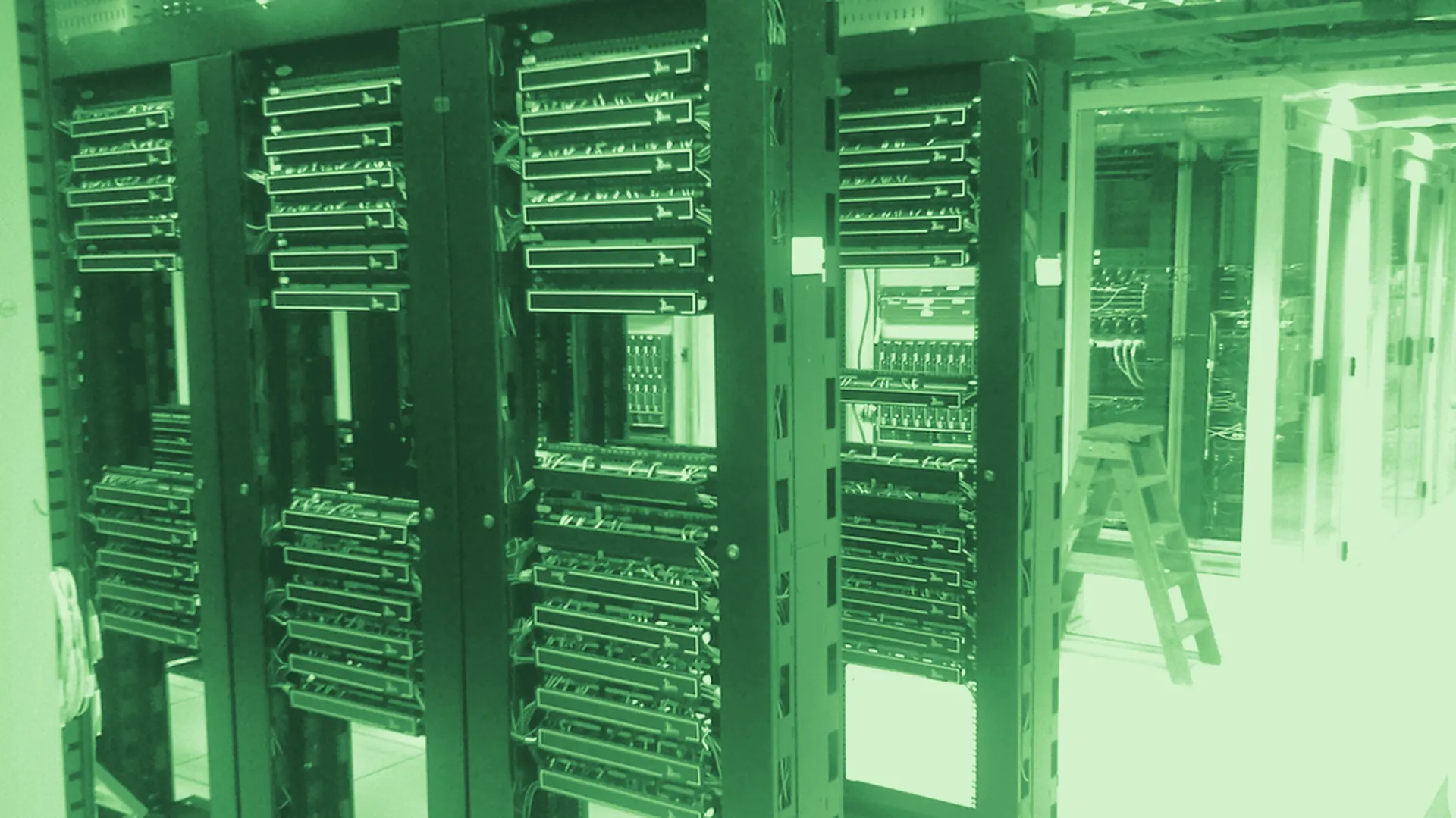
A virtual machine is a software emulation of a computer - its own processors, memory, storage and network interfaces - running on physical hardware shared with other machines of the same kind.
Each VM runs its own operating system and behaves from inside like a standalone machine; it is unaware that the hardware beneath it is shared. A layer called the hypervisor draws the boundary, allocating real resources to each guest and keeping the guests apart. Because that boundary sits at the hardware level, different operating systems can run side by side on one host, and an entire machine can be saved, cloned and moved as a file.
What a VM is made of
A virtual machine is a small assembly:
- A hypervisor - the layer that partitions the host and enforces isolation between guests.
- A guest operating system - booted inside the VM, with no view of its neighbours.
- Virtual devices - disk, network and clock interfaces presented to the guest, emulated or paravirtualised.
- An image - the template a machine is created from, holding the operating system and whatever else was baked into it.
- A lifecycle - create, start, pause, snapshot, resize, migrate, destroy, each addressable through an API.
Isolation is the property people buy. Two workloads sharing a physical host are separated by the hypervisor rather than by an operating system process, which is a stronger boundary and a heavier one - every guest carries its own kernel, and that cost is measured in memory and startup time rather than in risk.
Virtual machines beside containers
The nearest rival to a VM is the container: a package sharing the host kernel, isolated by kernel features rather than by a separate operating system. Containers start faster and cost less memory; VMs give a hardware-level boundary and can run a different operating system on the same host.
Most systems use both. Virtual machines provide the nodes - the isolated, replaceable machines a control plane manages - and containers run on those nodes as the unit of deployment. Choosing between them is usually a question about the boundary you need, not a verdict on either technology.
Where virtual machines come from
VMs are what infrastructure as a service actually sells: an instance is a defined shape of machine created from an image on demand. The machinery behind that request is a cloud control plane, and OpenStack is the best-known open source example - it exposes the create, resize and destroy calls, plus the images, networks and quotas around them.
Beneath the control plane sits the hypervisor itself, commonly KVM on Linux hosts. The separation matters when evaluating a provider: the control plane determines what you can request, while the virtualisation layer determines how strongly the resulting machines are isolated from one another.
Images carry most of the operational weight. An instance is only as reproducible as the image it started from, so teams that treat images as build artefacts - versioned, rebuilt from a definition, discarded when obsolete - can treat machines as disposable. Teams that patch them in place after creation tend to discover that the control plane's idea of a machine and the machine's real state have drifted apart.
Machines selected by attribute
On VirtEngine, an instance is chosen by describing it: processor count, memory, image, region, network rules. That description is matched against published infrastructure listings where a provider states which shapes it will serve and on what terms, so the comparison happens on specification rather than on a sales conversation.
The tenant funds an escrow account when placing the order, the match becomes a lease binding the three parties together, and the provider's control plane builds the machine and meters its runtime. Usage arrives as signed records, drawn from escrow as line items after the dispute window, with anything unspent returned when the lease closes.
Choosing by attribute also makes the trade-offs visible. A shape picked for a steady workload can be resized when demand changes, and a snapshot offers a route back that a rebuild does not. What none of that repairs is a workload which assumed it owned the hardware underneath: kernel modules, timing assumptions and device access are the usual surprises when a machine stops being a fixed thing.
In practice
A tenant specifies processors, memory and image; listings matching that description are compared, one is ordered through escrow, and runtime is metered against it until the lease closes.
Questions
Asked about what is a virtual machine
What is a virtual machine in simple terms?
A software computer running on real hardware alongside other software computers. It has its own operating system and resources, and it does not know that the machine beneath it is shared with anything else.
What is the difference between a VM and a container?
A VM runs its own operating system on hardware partitioned by a hypervisor; a container shares the host kernel and is isolated by kernel features. VMs give a heavier, hardware-level boundary; containers are lighter and start faster.
What is a VM image?
A template containing the operating system and whatever software was baked into it, used to create new machines quickly. Instances made from the same image start identical, which is what makes configuration reproducible at scale.
How is a virtual machine bought on a marketplace?
By describing the shape you need - processors, memory, image, region - and matching it against published listings. The order funds escrow, the provider builds the instance, and metered runtime settles against that escrow after a dispute window.
Related
Keep reading
- What is IaaS? What is IaaS? Rented compute, storage and networking you configure yourself: the service model, its boundary, and how instances are listed.
- What is containerization? What is containerization? Packaging an application with its dependencies into an image that runs the same everywhere: built once, run anywhere.
- What is bare metal? Bare metal is a whole physical server for one tenant. When to choose it over virtual machines, what you take on, and how it is listed.
- What is an Open Source Cloud Platform? The software you run to operate a cloud yourself: what an open source cloud platform includes, how it differs from managed cloud, and how providers connect it to a marketplace.
- All definitions Every cloud and marketplace term, defined in one place.
Longer explainers live in Learn; the full vocabulary is in the marketplace glossary.